Early
Warning Signs
of Diabetes and
Mangosteen Supplements
That Can Help
Diabetes
is an epidemic in the United States
and in most parts of the globe. The World Health
Organization reveals that at least
200
million people worldwide suffer
from diabetes,
this
accounts for 2.8% of the earth’s
population!
Diabetes
mellitus occurs throughout the
world, but is more
prevalent in
the more developed countries.
Diabetes
mellitus,
often referred to simply as diabetes,
is a
metabolic disorder arising from
the combination of genetic and
environmental factors which
typically result in abnormally
high blood
glucose levels. The
internationally recognized normal
blood sugar level
is about 90 mg/100ml. Among
diabetics,
this
is usually above 200
mg/100ml. Blood glucose
levels are regulated
by a complex interplay of
chemicals and hormones in the
body, primarily
the hormone insulin produced by
the beta cells of the Islets of
Langerhans of the pancreas. As a
whole, diabetes
results
from defects in either insulin
secretion or insulin action in
the body.
There are
basically two types of diabetes. Type 1
diabetes mellitus
is characterized by loss of the
insulin-producing beta cells in
the
pancreas leading to a deficiency
of insulin. Type 2
diabetes
is defined differently and is due
to insulin resistance or
diminished
insulin sensitivity. The abnormal
response of body tissues to
insulin
involves a defect in the insulin
receptors in cell membranes. Type 2
diabetes can
also be the result of a metabolic
strain on one’s system, often due
to obesity and/or lack of exercise.
Both
types can be deadly. There
are similarities between the
symptoms, but many patients either
are
unaware, or choose to ignore them
until their blood sugars reach
critical levels. When this occurs
hospitalization is already necessary
otherwise death may occur. For
these reasons, it is imperative to
recognize the early warning signs of
diabetes.
There are three early
manifestations of Type 1
diabetes and
many cases of Type 2. These are
usually
referred to as the cardinal signs
and symptoms or the “triad” of
diabetes; they
are polyuria or frequent urination,
polyphagia or increased appetite
and polidipsia or excessive thirst.
Polyuria
occurs as the body needs
to flush the extra glucose in the
bloodstream. As a consequence,
polidipsia occurs as the body
requires to replenish fluids and
electrolytes lost from frequent
urination. As the body suffers from
the
lack of insulin or a resistance in
its biologic function, it tends to
utilize other energy sources such as
fats and proteins instead of
glucose and carbohydrates. As
a result, polyphagia occurs wherein
the diabetic tends to eat more to
compensate for the loss of fats and
proteins.
The
treatment of diabetes
is as
complicated as the disease itself.
In fact, for many patients, their
treatment regimen involves a team of
doctors. Many
Type 1 treatments include
combination of regular insulin, and/or synthetic
insulin analogs. Another
Type 1 treatment option is
the use of the insulin pump. Type
2 has
no absolute cure, although recent
medical advancements have shown
that
a type of gastric bypass surgery
can regulate blood sugar levels in
80-100% of obese patients with diabetes.
In
some milder cases, diet and
regular exercise can do the trick
in
keeping blood glucose levels in
check.
Diabetes
is
common yet it can be very deadly
especially when left untreated. It
is
unique in such a way that it can
affect almost all organ systems in
the
body. It is also a disease with a
long list of acute and chronic
complications. There are
standard treatments for the
disease but
with the growing number of cases,
most patients are looking for
supplements and alternative
medications. There are advocates
for
vitamins (C and E), minerals
particularly chromium, zinc and
copper as
well as phytonutrients. However,
there is one particular product
that
has caught the attention of
diabetics and
the medical world…the purple
mangosteen.
The primary goal
in the treatment of diabetes
mellitus is to
keep the blood glucose level as
near normal as possible. This helps
in the prevention of complications.
The antioxidants present in Mangosteen
offer
numerous benefits for those with diabetes
mellitus
in terms of boosting the immune
system and reduction of blood plasma
cholesterol
level. There
are several classes of compounds
found in the Mangosteen which
show potent antioxidant properties,
the most notable are called xanthones.
In
fact, there is a whole family of
xanthones, and
the most dynamic of these are found
in the Mangosteen. Xanthones are
naturally antibiotic, antiviral, and
anti-inflammatory; and are some of
the most powerful antioxidants found
in nature. Other biologically
active compounds found in Mangosteen
are
catechins, tannins,
proanthocyanidins, polyphenols and
sterols.
Chronic
inflammation is one of the leading
causes of Type 2
diabetes.
As
such, the natural
anti-inflammatory properties of
xanthones and
tannins found in Mangosteen
can therefore help in controlling
Type 2
diabetes.
Mangosteen also has the remarkable
ability to lower and regulate
blood
sugar,
increase energy levels, and
decrease the need for hypoglycemic
medications,
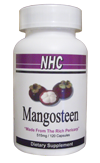
Mangosteen
supplements come in
different forms. The juice form may
contain
sugar
and other fruit extracts to improve
its taste, which is harmful to
diabetics. The production of
mangosteen juice includes the
process of
pasteurization and reconstitution
which significantly decrease the
health benefits that diabetics are
after. It would be wiser to opt for
the capsule form which does not
require the addition of sugar and
preservatives to prolong its shelf
life. The capsule form also contains
100% mangosteen,
while the juice form has little
amount of the main
ingredient because of the many
additives incorporated into the
product.
Recommended
Products